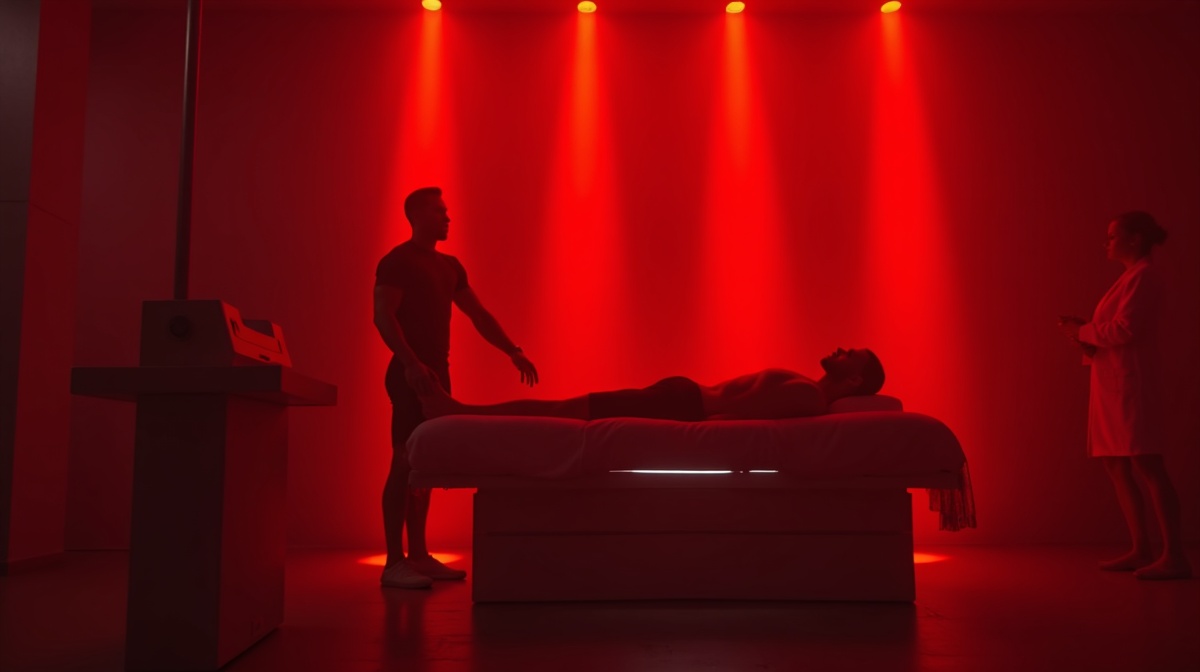
Collagen Synthesis and Skin Renewal at 660nm
Dr. Elena Voss
Chief Science Officer
The pursuit of youthful skin has historically been dominated by topical formulations — retinoids, peptides, antioxidants — applied to the surface of epidermis. But the most significant driver of skin aging occurs deeper, in the dermis, where fibroblasts synthesize the collagen and elastin that maintain structural integrity.
Red light at 660nm penetrates approximately 1-2mm into skin tissue, reaching the papillary dermis where fibroblast populations reside. This wavelength is specifically absorbed by mitochondrial chromophores in these cells, triggering enhanced cellular metabolism.
Research published in the Journal of Biophotonics demonstrated that fibroblasts exposed to 660nm light at optimal irradiance showed a 155% increase in proliferation rate and a 31% increase in collagen type I production. These aren't abstract measurements — they translate directly to visible improvements in skin texture, fine line reduction, and elasticity.
The mechanism extends beyond simple ATP enhancement. Photobiomodulation at 660nm upregulates transforming growth factor beta (TGF-β), a key signaling molecule that orchestrates collagen remodeling. It also increases matrix metalloproteinase expression in a controlled manner, facilitating the turnover of damaged collagen while stimulating replacement.
Unlike ablative laser treatments or chemical peels, red light therapy achieves these results without compromising the skin barrier. There's no downtime, no peeling, no photosensitivity. Just progressive, cumulative improvement that becomes visible over 8-12 weeks of consistent use.
For professionals who need to look sharp in high-stakes environments — boardrooms, client dinners, on-camera appearances — red light offers a maintenance protocol that integrates seamlessly into any routine. Ten minutes in the morning, ten minutes in the evening. No appointments, no recovery windows.